
LET’S TALK ANXIETY
By Amy Seader
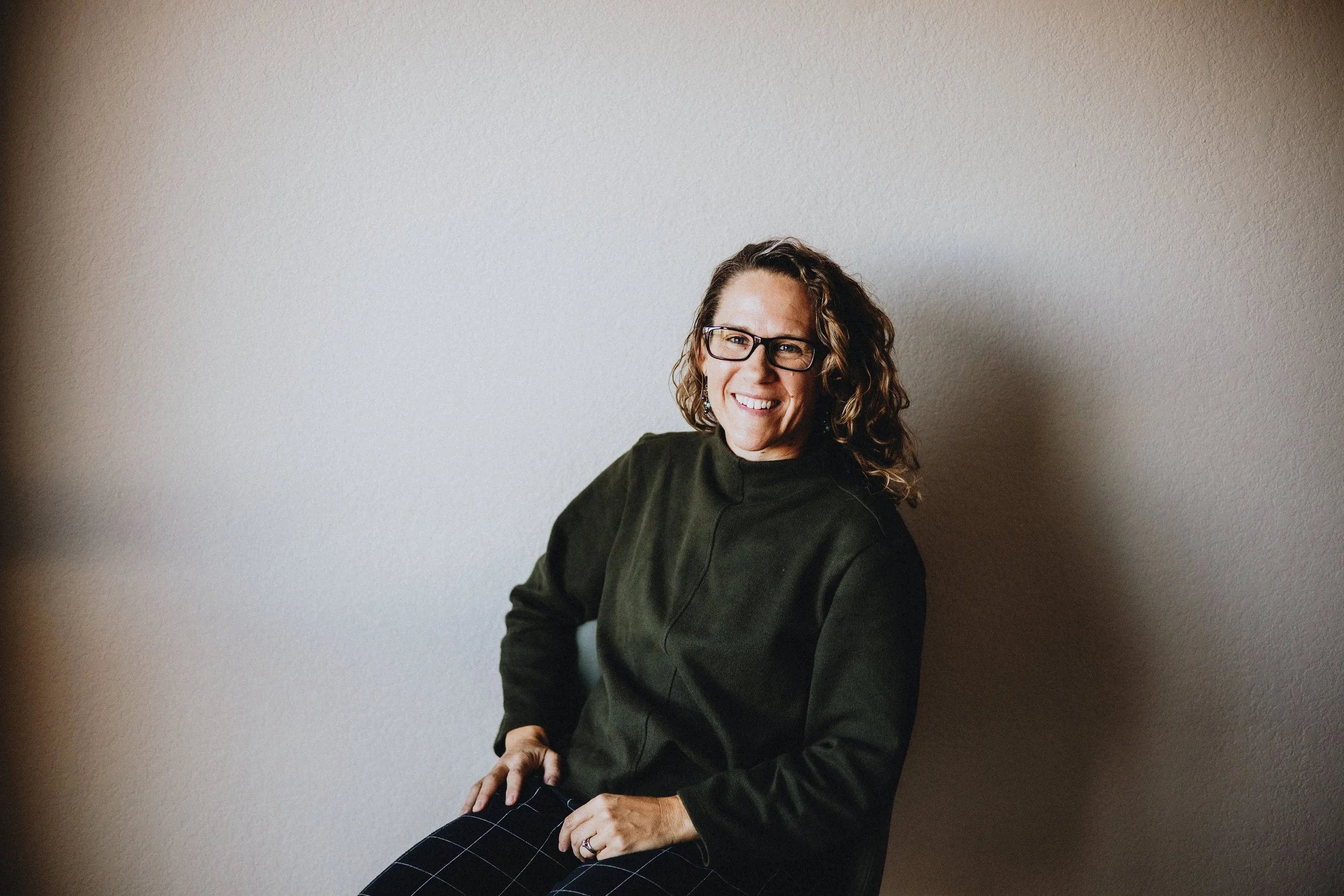
As a new therapist at Soul Space who works with kids and families, I want to share a little about the work I love to do. Let's talk about anxiety, and don't worry, it is not a bad word, I promise!
Working in a school system over the past six years, I have come across so many kids experiencing anxiety, and so many parents who are anxious about their children's anxiety. I get it. As a mom who recognized anxiety in her own child, I realized I needed to learn more so I could, hopefully, help other families do the same.
After attending an intensive course with therapist and anxiety expert Lynn Lyons in 2020, I started to build my toolbox of knowledge about what anxiety is and what it isn't. But the biggest takeaway was realizing I needed to begin a new relationship with my own anxiety. So, anxiety and I sat down, had a little talk, and really got to the root of our problems. We figured out how we could work as a team rather than having anxiety be in charge of me! George is what I call my anxiety. George can be annoying, sometimes funny, and even helpful, like when I see a dreaded snake, but they absolutely do not like it when I step out of my comfort zone.
As Lynn Lyons likes to say, anxiety (a.k.a. George) wants two things: for me to be comfortable and for me to know exactly what is going to happen next. Predictable and comforting. This sounds nice, like a warm blanket on a cold day, but it doesn’t help me push through my fears. In fact, when I give anxiety everything it wants, it only intensifies those fears. That warm blanket, although comforting, can become a place to hide, keeping me inside and avoiding the cold. Instead, I need to grab a sweater and step outside to face it and discover what the world has to offer.
So, as I continue to build my relationship with George, I help the kids and families I work with learn how to maneuver their relationship with anxiety by taking small, brave steps. Ironically, those steps can make anxiety show up louder at first, but the goal is to begin to recognize that we all have a "George", and that's okay.
One of the ways that I do this is by helping families think about when anxiety tends to show up. Anxiety is predictable and has patterns. Certain situations, transitions, or "what if" thoughts tend to invite your old friend, George, to the party! When we start to recognize those moments, we can start to prepare to handle them.
We know anxiety is going to show up at some point, so why not be ready for it? Being ready doesn't mean we avoid the situation or even try to make anxiety disappear (remember, George can come in handy!). Instead, it means asking an important question: What am I willing to do when anxiety shows up?
To answer that question, it’s helpful to think about how much discomfort we are willing to tolerate in order to push back against that anxious voice that says, “I can’t do this.” Anxiety tries to convince us that feelings of discomfort equate to danger, and that we need to quickly find a way to feel safe and comforted. But discomfort, even when it feels huge, is not the same as being in real danger.
Instead, we practice taking small and intentional steps with anxiety present. Invite George to that party, but make sure you set up expectations for George ahead of time.
For kids, this may look like walking to class without a parent, sleeping in their own bed, or going to a birthday party with friends even if feeling unsure.
For parents, it often means learning how to respond in ways that build confidence rather than reinforce fear.
Over time, we start to learn how to handle George without immediately needing to be rescued or reassured. When we realize that we can tolerate discomfort and move through it, anxiety no longer gets to be the star of the party! That's why I often recommend taking those first steps (yay, you can do it) even when it feels so uncomfortable.
If you are interested in learning more about this approach, Lynn Lyons has a book called Anxious Parents, Anxious Kids that does an amazing job of explaining how anxiety works and how families can respond to it differently. There is also a great corresponding book for kids of all ages called Playing with Anxiety: Casey’s Guide for Teens and Kids. Both are great resources for families wanting to understand anxiety and support their child in building resilience.